

Ghana’s entertainment and digital culture continue to move quickly, with music charts, award ceremonies, celebrity conversations and social-media discussions creating a constant stream of stories for audiences at home and abroad. On September 28, 2026, the latest entertainment conversation includes the Ghana music chart, recognition for event promoters, debates about Ghanaian cultural identity and the wider growth of African entertainment.
Why Ghana’s entertainment conversation keeps expanding
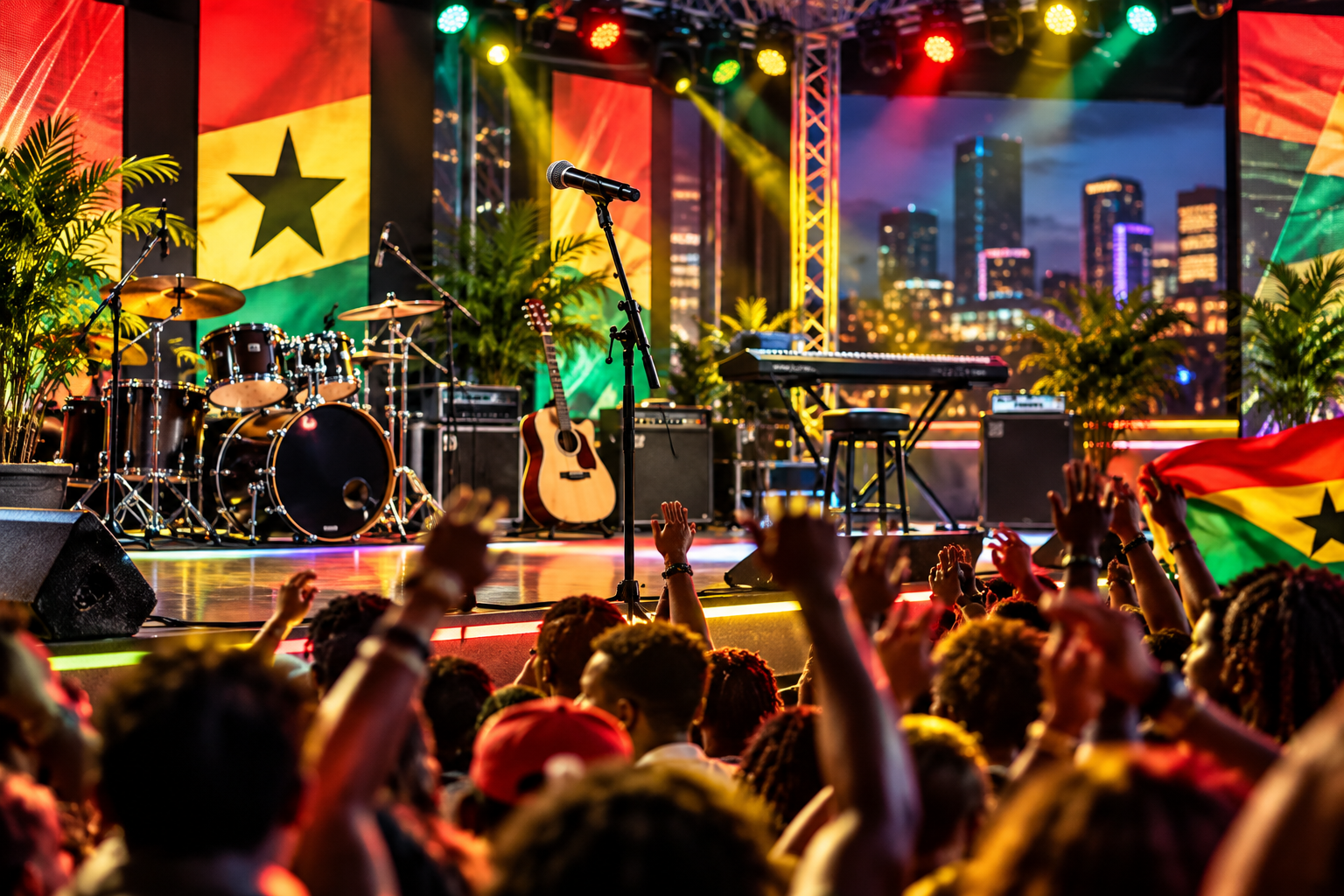
Entertainment is no longer limited to radio countdowns, television programmes and weekend events. Ghanaian audiences now discover music through streaming platforms, short-form video, online radio, podcasts, live events and social networks. This has changed how songs become popular and how artists communicate with listeners. A record can gain attention through a radio premiere, become popular on a streaming platform, generate a dance trend and then return to radio with a much larger audience.
That cycle creates opportunities for artists, producers, event organisers, radio presenters, DJs, digital publishers and businesses. It also means that entertainment journalism has to provide more than a headline. Readers want context: who is involved, what happened, why it matters, what has been confirmed and what remains unverified.
Music charts remain an important audience signal
The latest Apple Music Ghana chart provides one snapshot of what listeners are consuming on a major streaming platform. Recent chart reporting has highlighted Kweku Smoke among the leading names, alongside artists including Black Sherif, Fameye, Davido, FOLA and Mayorkun. A chart position is not the same thing as a complete measurement of Ghana’s music industry, because listeners also use YouTube, Boomplay, Audiomack, radio, live events and other platforms. Nevertheless, charts help show which records are attracting attention at a particular moment.
For artists, chart visibility can support discovery and conversations around a release. For labels and independent managers, chart movement can provide a useful signal when planning promotion. For radio stations, it can be one of several sources considered when building playlists. For fans, charts are simply another way to compare what people are listening to.
The importance of Ghanaian identity in entertainment
Entertainment is also a cultural record. Language, clothing, food, humour, storytelling and music styles are continually reflected in popular culture. Actress and filmmaker Lydia Forson has recently spoken about concerns that foreign terms can gradually replace familiar Ghanaian expressions. Her comments have reopened a broader cultural discussion about how language changes when local entertainment becomes increasingly global.
Language naturally evolves, particularly among young people who interact with international media every day. At the same time, local words carry history and meaning that can disappear from everyday use if they are no longer passed between generations. The entertainment industry can help preserve those expressions by using Ghanaian languages naturally in songs, films, interviews and online content.
Awards and recognition for event organisers
Event promotion is another part of the entertainment economy that often receives less attention than performers. Yet concerts, festivals, award shows, club events and cultural programmes require planning, marketing, venue management, ticketing, security and coordination with artists. Recognition at industry awards can therefore draw attention to the people working behind the scenes.
AK24 Entertainment has been reported as the Event Promoter of the Year at the Ghana Entertainment Awards USA 2026. Recognition of promoters is relevant because successful events depend on a network of professionals rather than performers alone. A strong event ecosystem can create work for sound engineers, lighting teams, photographers, videographers, stylists, security companies, transport providers and hospitality businesses.
Why entertainment businesses need stronger digital strategies
Ghanaian entertainment companies increasingly need a digital strategy that goes beyond posting a flyer. Audiences expect event information to be easy to find, tickets to be clearly explained, music links to work on mobile devices and social pages to provide timely updates. Artists also need reliable digital assets, including press photographs, biographies, release information and contact details.
For publishers, the same principle applies. A useful entertainment article should answer the questions a reader is likely to have. Instead of repeating a social-media post, a publisher can explain the background, identify confirmed information, provide dates and locations where available, and distinguish direct statements from online speculation.
Radio remains part of the music discovery system
Streaming has not eliminated radio. Ghanaian radio continues to provide companionship, news, music discovery, interviews and local conversation. The relationship between radio and digital platforms is increasingly complementary. A song may be discovered on radio, searched online, streamed repeatedly and then discussed on social media. Conversely, a record that becomes popular online can quickly move into radio programming.
This makes radio programming and digital publishing important partners in the music ecosystem. Stations can use digital channels to extend interviews and shows beyond broadcast hours, while online platforms can help listeners find stations and programmes from anywhere with an internet connection.
What audiences should look for in entertainment reporting
Fast-moving entertainment stories can easily become distorted when unverified claims are repeated. Readers should look for clear attribution, dates, direct statements and reliable supporting information. A social-media post can be evidence that somebody said something online, but it does not automatically prove every claim contained in the post.
Responsible entertainment reporting should also avoid unnecessary personal speculation. When an allegation is made, a publisher should identify it as an allegation, seek a response where appropriate and avoid presenting disputed claims as established facts. This approach protects both audiences and the people being discussed.
The business side of Ghanaian entertainment
The entertainment economy includes much more than music sales. It covers advertising, sponsorship, streaming, event tickets, merchandising, broadcasting, publishing, brand partnerships, hospitality and tourism. A successful cultural event can bring visitors into a city and create revenue for hotels, restaurants, transport operators and local vendors.
For young entrepreneurs, this creates opportunities in areas such as event technology, ticketing, artist management, content production, digital marketing and creator services. Businesses can also build specialised services for artists, including accounting, legal support, distribution, photography and public relations.
Why original Ghanaian content matters online
As more Ghanaian stories move online, original reporting becomes increasingly valuable. A publisher does not need to be first with every headline to provide useful journalism. A well-researched explanation can remain valuable after the first wave of social-media attention has passed.
Originality also means adding information rather than changing a few words from another website. A strong article can combine confirmed facts, context, public records, interviews, timelines and practical explanations. This is particularly important for readers who search for a topic several days after an event.
How artists can build sustainable audiences
Artists can benefit from treating each release as a long-term project. A song can have a launch phase, radio promotion, live performances, short-form content, interviews and follow-up releases. Building an audience also requires consistency. Fans are more likely to remain engaged when they can regularly find music, performances and meaningful communication from an artist.
At the same time, artists should pay attention to ownership and professional documentation. Agreements with collaborators, producers, managers and event organisers should be clear. Metadata, credits and release information should be accurate across platforms.
The role of Ghanaian publishers
Digital publishers have an opportunity to document the growth of Ghana’s creative industries. Entertainment stories can serve audiences looking for breaking news, but they can also become reference material for people researching artists, events, music trends and cultural developments.
That requires discipline. Headlines should match the article. Images should be relevant and properly described. Internal links should help readers discover related stories instead of sending them into a maze. Pages should load well on mobile devices, and advertising should not overwhelm the actual article.
What comes next for Ghana entertainment
The direction of Ghanaian entertainment will continue to be shaped by technology, audience behaviour and creative talent. Streaming platforms will remain important, but radio, television, live events and community-based entertainment will continue to play roles. The most resilient businesses are likely to be those that understand how these channels work together.
For audiences, that means more ways to discover Ghanaian music, films, personalities and events. For creators, it means greater access to international audiences but also more competition for attention. For publishers, the opportunity is to provide accurate, original and useful coverage that goes beyond copying what is already circulating.
Final takeaway
Ghana’s entertainment sector is a broad ecosystem involving artists, fans, broadcasters, promoters, digital platforms and businesses. Current chart activity and industry recognition show that audience attention remains strong, while debates about language and cultural identity demonstrate that entertainment also carries social meaning. The strongest coverage will therefore combine timely reporting with context, verification and respect for the people and communities involved.
How fans can support the creative economy
Audiences are part of the entertainment economy. Buying legitimate tickets, streaming music through authorised platforms, attending official events and supporting licensed merchandise can help creators and businesses generate revenue. Sharing an artist’s work can also increase visibility, but audiences should be careful about links that redirect to suspicious downloads or unofficial pages.
Fans can also contribute by giving constructive feedback. The strongest entertainment communities allow people to disagree about music, films and performances without turning every difference of opinion into a personal attack. Healthy conversation can help creators understand what audiences value while preserving room for experimentation.
Opportunities for young creators
Ghana’s digital environment has lowered some barriers to entry for young creators. A person with a smartphone can produce interviews, commentary, music previews, comedy, educational entertainment or behind-the-scenes content. However, easy publishing does not automatically create a sustainable business. Creators still need consistency, audience understanding, reliable production and a clear approach to copyright and commercial partnerships.
Young creators should also keep accurate records of their work. Credits, release dates, agreements and ownership information can become important when a piece of content attracts commercial interest. Professional habits established early can reduce disputes later.
Events can connect entertainment with tourism
Concerts, festivals and cultural events can contribute to tourism when they are planned well. Visitors may spend money on accommodation, food, transport and local experiences in addition to tickets. Ghanaian event organisers can therefore think about how an event fits into the wider visitor economy.
Good planning includes clear dates, venue information, transport guidance, ticketing arrangements and communication about safety. These practical details may appear less glamorous than the headline performer, but they can strongly influence whether attendees have a positive experience.
Why accurate entertainment archives matter
Today’s entertainment headline can become tomorrow’s reference point. Accurate publication dates, names, event details and quotations help future readers understand how Ghana’s creative industries developed. Digital publishers should therefore treat articles as records rather than disposable social-media posts.
For that reason, a useful entertainment website should correct errors when they are discovered and update articles when confirmed information changes. Transparent corrections strengthen credibility and help readers distinguish reliable reporting from recycled rumours.
Looking ahead
The next stage of Ghana’s entertainment growth will likely involve stronger links between live events, radio, streaming, creator platforms and international audiences. Artists and promoters can reach people outside Ghana more easily than before, while local audiences can discover content from across Africa. The opportunity is substantial, but long-term success will depend on quality, professionalism and trust.
For readers, the most useful entertainment coverage will remain the coverage that tells them what happened, explains why it matters and provides enough context to make sense of the wider story.
SEO keywords: Ghana entertainment news, Ghana music news, Ghana trending news, Ghana music charts, Ghana Entertainment Awards, Ghana artists, Ghana radio, Ghana events, African entertainment, Ghana showbiz news.










Leave a Reply