

Stakeholders at the Northern Peace Conference in Tamale have called for stronger local solutions and coordinated action to sustain peace. The call, reported by the Ghana News Agency on November 7, 2026, places attention on a central issue in conflict prevention: lasting stability cannot depend only on emergency interventions after tensions have escalated.
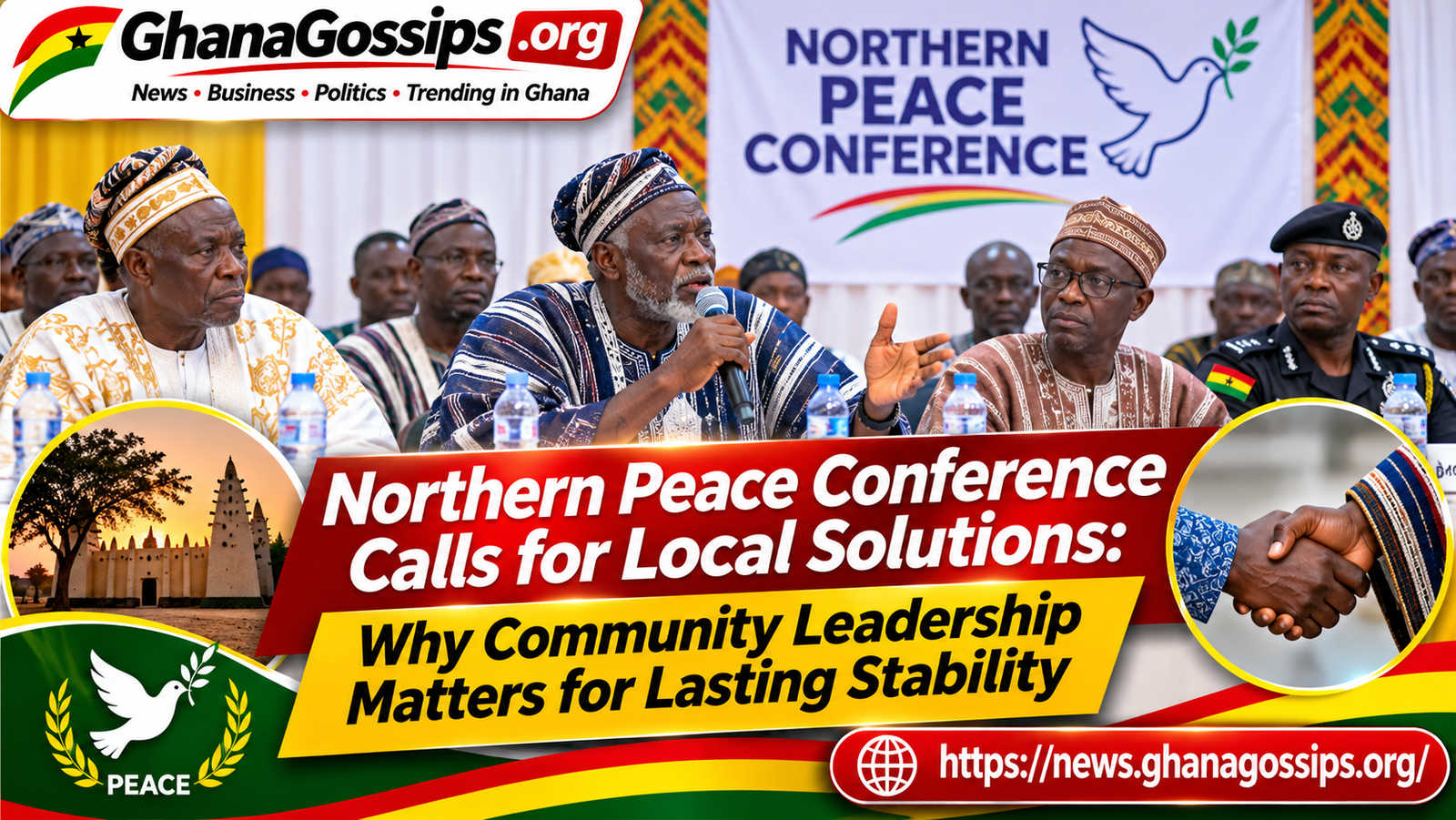
The Northern Peace Conference highlights the importance of community leadership, dialogue and locally driven solutions in building lasting peace and stability in Ghana. Read more on GhanaGossips.org.
Communities understand the local relationships, histories, land concerns and everyday pressures that can shape disputes. National institutions remain essential, but peacebuilding is more likely to endure when traditional authorities, district assemblies, youth groups, women’s organisations, religious leaders, security agencies and civil society work from a shared plan.
Why local knowledge matters
Conflicts rarely have a single cause. Disagreements may involve land boundaries, chieftaincy matters, access to resources, political competition, family disputes or misinformation. The same intervention may not work in every district. Local leaders can help identify early warning signs, understand the people affected and select communication channels that communities trust.
Local knowledge should not be used to exclude people or excuse intimidation. A credible peace process must protect the rights and safety of all residents, including women, young people, minority groups and people who may not have a powerful voice in traditional structures.
What coordinated action should look like?
Coordination means that institutions share information, agree on responsibilities and avoid sending conflicting messages. District authorities can support mediation and public education; security agencies can respond to threats within the law; traditional and religious leaders can encourage dialogue; and civil society groups can help communities participate safely.
It is also important to create clear referral pathways. Residents should know where to report threats, how to access mediation and what to do when a dispute involves violence or a serious criminal offence. Peacebuilding must never pressure victims to accept unsafe settlements or prevent lawful investigations.
Young people need meaningful roles.
The Northern Peace Conference highlights the importance of community leadership, dialogue and locally driven solutions in building lasting peace and stability in Ghana. Read more on GhanaGossips.org.
Youth participation is often discussed as a slogan, but it should involve practical responsibilities. Young people can contribute to local peace committees, community communication, sports and cultural activities, digital fact-checking and skills programmes. They should also have opportunities to raise concerns about employment, education and public services.
When young people are treated only as an audience for peace messages, important perspectives may be missed. When they are included in decision-making, they can help identify rumours early and build relationships across community lines.
Women’s participation strengthens prevention.
Women often experience the consequences of conflict in specific ways, including disruption to household income, education, health services and family safety. Women’s groups can contribute valuable knowledge about local tensions and the needs of vulnerable residents. Their participation should be meaningful, with access to information and influence over decisions, rather than limited to ceremonial representation.
Measure peacebuilding by outcomes.
Communities and public agencies need ways to assess whether interventions are working. Useful indicators may include the speed with which disputes are referred for mediation, participation in community meetings, public trust in reporting channels, school attendance in affected areas and the recurrence of specific disputes. Data should be handled carefully so it does not expose people to retaliation.
Funding also matters. Community committees need training, meeting resources and access to professional mediation where necessary. Programmes should be designed for the long term rather than launched only when a crisis attracts national attention.
The Northern Peace Conference highlights the importance of community leadership, dialogue and locally driven solutions in building lasting peace and stability in Ghana. Read more on GhanaGossips.org.
How residents can contribute
- Verify sensitive information before forwarding it on social media.
- Use lawful reporting channels when threats or violence occur.
- Support dialogue led by credible and inclusive local structures.
- Reject hate speech and language that targets entire communities.
- Encourage young people and women to participate in local decision-making.
Frequently asked questions
What was the key message from the Northern Peace Conference?
Stakeholders called for stronger local solutions and coordinated action to sustain peace, according to the Ghana News Agency report of November 7, 2026.
Can traditional leaders resolve every dispute?
No. Traditional leadership can support dialogue, but serious crimes, threats and rights violations require appropriate lawful institutions and protections.
Why involve young people and women?
They bring perspectives and community networks that can improve early warning, inclusion and the durability of peace efforts.
Peace is not secured by a conference statement alone. It grows when communities have trusted ways to address grievances, public institutions respond fairly and people see practical improvements in safety and opportunity.
Source: Ghana News Agency: Northern Peace Conference top story, November 7, 2026. Follow national and community reporting at Ghana Gossips.
















Leave a Reply