

Business Insurance Ghana: Complete Guide for Protecting Your Company in 2026
Business owners in Ghana face numerous risks every day, from property damage and theft to legal claims, employee injuries, cyberattacks, and unexpected business interruptions. Without proper protection, these risks can result in significant financial losses that threaten the survival of a company. This is why Business Insurance Ghana has become an essential investment for businesses of all sizes, from startups and SMEs to large corporations.
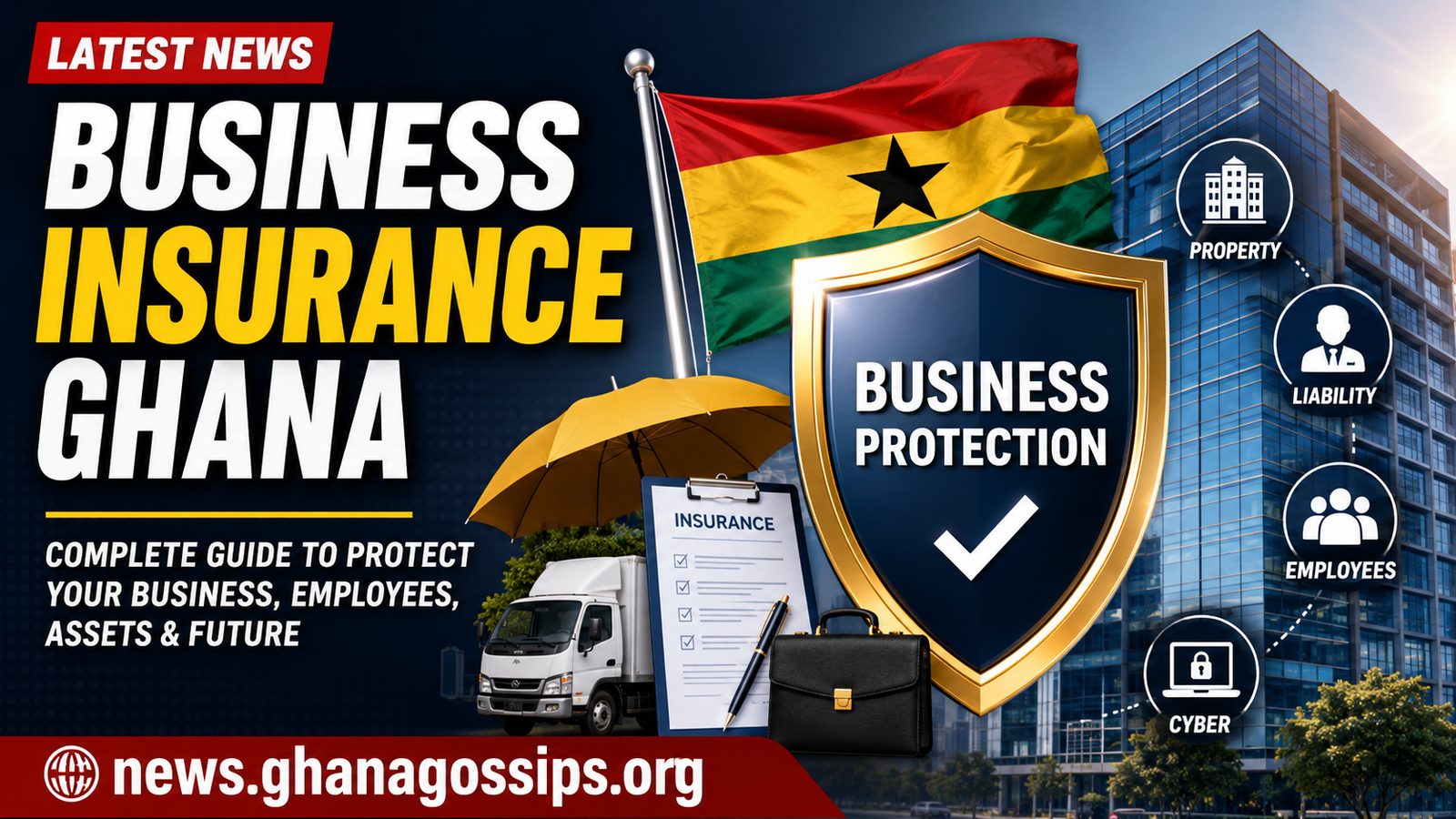
Business Insurance Ghana helps businesses protect property, employees, revenue, and long-term growth.
Business Insurance Ghana provides financial protection against unforeseen events that could negatively impact operations, assets, employees, and profitability. Insurance policies help businesses recover quickly after losses while maintaining financial stability and customer confidence. Whether operating in retail, manufacturing, construction, agriculture, technology, healthcare, or professional services, every business can benefit from comprehensive insurance coverage.
As Ghana’s economy continues to expand and regulatory requirements evolve, more businesses are recognising the importance of risk management and insurance planning. This guide explores the most important aspects of Business Insurance Ghana, including coverage options, benefits, costs, legal considerations, and emerging industry trends.
What Is Business Insurance Ghana?
‘Business Insurance Ghana’ refers to a range of insurance policies designed to protect businesses from financial losses resulting from unexpected events such as property damage, theft, fire outbreaks, legal claims, employee injuries, cyberattacks, natural disasters, and business interruptions. In today’s competitive and rapidly changing business environment, insurance is not just an optional expense but a critical risk management tool that helps companies survive and grow despite unforeseen challenges.
Businesses in Ghana operate in various sectors, including retail, manufacturing, agriculture, construction, healthcare, transportation, hospitality, and technology. Regardless of industry or company size, every business faces risks that could significantly impact operations and profitability. Business Insurance Ghana helps organisations reduce these risks by providing financial compensation when covered losses occur.
One of the main purposes of business insurance in Ghana is to protect company assets. Business assets such as buildings, equipment, machinery, inventory, office furniture, and vehicles represent significant investments. If these assets are damaged by fire, theft, vandalism, floods, or other covered incidents, insurance helps businesses recover financially and continue operations with minimal disruption.
Property insurance is one of the most common forms of business insurance. This type of coverage protects physical assets from loss or damage caused by covered events. For example, if a fire destroys a warehouse or office building, property insurance can help cover repair or replacement costs. Many businesses rely on property insurance to safeguard investments and maintain operational stability.
Liability insurance is another important component of business insurance in Ghana. Businesses may be held legally responsible if customers, visitors, suppliers, or members of the public suffer injuries or property damage related to business activities. Public liability insurance helps cover legal expenses, compensation claims, and court costs associated with such incidents. Without liability coverage, businesses could face significant financial burdens from legal disputes.
Employee protection is also an important aspect of business insurance. Companies have responsibilities toward their workforce and often provide insurance coverage for employees through group life insurance, health insurance, workplace accident insurance, and other employee benefit programmes. These policies support employee welfare while helping businesses meet legal and ethical obligations.
Business interruption insurance provides protection against income loss resulting from disruptions to normal operations. If a business is forced to close temporarily due to fire, flooding, theft, or other covered events, business interruption coverage can help replace lost revenue and cover ongoing operating expenses. This type of insurance is particularly valuable for small businesses that may struggle to recover from prolonged interruptions.
Cybersecurity risks are becoming increasingly important in the digital age. Many organisations rely on technology, online transactions, and digital customer information. Business insurance in Ghana increasingly includes cyber insurance solutions that protect businesses from data breaches, cyberattacks, ransomware incidents, and digital fraud. As cyber threats continue growing, this coverage is becoming essential for modern businesses.
Small and medium-sized enterprises (SMEs) can benefit significantly from business insurance. Many small businesses operate with limited financial reserves, making them particularly vulnerable to unexpected losses. Insurance provides a financial safety net that enables SMEs to recover more quickly from adverse events and continue serving customers.
Choosing the right insurance policy requires careful evaluation of business risks, operational needs, and financial objectives. Insurance providers typically assess factors such as business size, industry type, location, asset value, employee numbers, and risk exposure when recommending coverage options. Professional insurance advice can help businesses select policies that provide adequate protection without unnecessary costs.
The insurance industry in Ghana continues evolving as businesses become more aware of risk management practices. Digital insurance platforms, online policy management systems, artificial intelligence, and data analytics are improving access to insurance products and enhancing customer experiences. These innovations are making Business Insurance Ghana more accessible and efficient than ever before.
Government regulations and industry standards also encourage businesses to maintain appropriate insurance coverage. In certain sectors, specific insurance policies may be mandatory to protect employees, customers, and stakeholders. Compliance with insurance requirements helps businesses avoid legal issues while strengthening operational resilience.
In conclusion, Business Insurance Ghana is an essential tool for protecting businesses against financial uncertainty and operational risks. Whether safeguarding property, covering legal liabilities, protecting employees, managing cyber risks, or ensuring business continuity, insurance provides the financial security necessary for long-term success. As Ghana’s economy continues to grow, effective business insurance strategies will remain a key component of sustainable business management.
Internal Links
For more business and financial news, visit https://news.ghanagossips.org/. Readers can also explore current affairs at https://myghpages.com/, educational resources at https://tuneon.net/, media content at https://flymultimediagh.com/, and additional updates at https://ghanaradiolive.com/.
External Authority Links
National Insurance Commission Ghana: https://nicgh.org/
SIC Insurance PLC: https://www.sicinsurance.com/
Types of Business Insurance Policies in Ghana
Understanding the different types of Business Insurance Ghanaian policies are essential for business owners seeking comprehensive protection against financial risks and operational disruptions. Every business faces unique challenges depending on its industry, size, location, and operational activities. As a result, insurance providers offer a variety of policies designed to address specific risks and provide tailored protection for businesses across Ghana.
One of the most common forms of business insurance in Ghana is property insurance. This policy protects physical assets such as office buildings, warehouses, equipment, machinery, furniture, computers, and inventory. Property insurance helps businesses recover financially if assets are damaged or destroyed by covered events such as fire, theft, vandalism, storms, or certain natural disasters. For many companies, property insurance serves as the foundation of their risk management strategy.
Fire insurance is another important coverage option. Fire outbreaks can cause devastating losses, particularly for businesses operating warehouses, factories, retail stores, and office facilities. Fire insurance helps cover repair costs, rebuilding expenses, and replacement of damaged assets. Given the potentially severe financial impact of fire incidents, many businesses consider this coverage essential.
Liability insurance is designed to protect businesses from legal claims arising from injuries, accidents, or property damage involving third parties. If a customer slips and falls on business premises or a company’s operations cause damage to another person’s property, liability insurance can help cover legal fees, compensation costs, and settlement expenses. Business Insurance Ghana policies often include public liability coverage to reduce financial exposure from lawsuits and legal disputes.
Commercial motor insurance is essential for businesses that own or operate vehicles. Delivery companies, transportation firms, logistics providers, construction companies, and service-based businesses frequently rely on commercial vehicles for daily operations. Motor insurance helps cover damages resulting from accidents, theft, fire, and third-party liabilities involving company vehicles.
Business interruption insurance protects companies against income loss resulting from unexpected disruptions. If a business is forced to suspend operations due to fire, flooding, theft, or other covered incidents, this insurance helps replace lost revenue and cover ongoing operational expenses. Business interruption coverage can be particularly valuable for small and medium-sized enterprises that may struggle financially during prolonged closures.
Employee-related insurance policies are also important components of business insurance in Ghana. Employers often provide group life insurance, health insurance, accident insurance, and workers’ compensation coverage for employees. These policies help protect workers while improving employee satisfaction and workplace security.
Professional indemnity insurance is particularly relevant for consultants, lawyers, accountants, engineers, architects, healthcare professionals, and other service providers. This policy protects businesses against claims resulting from professional errors, omissions, negligence, or advice that causes financial loss to clients. As professional services continue expanding in Ghana, indemnity insurance is becoming increasingly important.
Cyber insurance has emerged as a modern insurance solution addressing digital risks. Businesses increasingly rely on technology, cloud systems, customer databases, and online transactions. Cyber insurance helps protect against financial losses resulting from data breaches, cyberattacks, ransomware incidents, identity theft, and online fraud. As cybersecurity threats continue growing, cyber coverage is becoming a valuable addition to business insurance portfolios.
Marine insurance is essential for businesses involved in international trade, shipping, and import-export activities. This coverage protects goods during transportation by sea, air, or land. Marine insurance helps businesses recover losses resulting from cargo damage, theft, delays, or transportation-related incidents.
Product liability insurance is particularly important for manufacturers, distributors, and retailers. If a product causes injury, illness, or property damage, businesses may face legal claims and compensation demands. Product liability coverage helps manage these risks and protect business finances.
Choosing the right combination of insurance policies depends on the specific needs of each organisation. Risk assessments, industry requirements, asset values, employee numbers, and operational activities all influence coverage decisions. Professional insurance advisors can help businesses identify appropriate policies and coverage levels.
As Ghana’s business environment continues evolving, the demand for specialised insurance products is increasing. Modern Business Insurance Ghana solutions provide businesses with the flexibility to customise coverage according to unique risk profiles and operational requirements.
In conclusion, understanding the various types of business insurance Ghana policies is essential for building a comprehensive risk management strategy. From property and liability coverage to cyber insurance and business interruption protection, these policies provide financial security and help businesses operate confidently in an increasingly complex environment.
Internal Links
For more business and financial news, visit https://news.ghanagossips.org/. Readers can also explore current affairs at https://myghpages.com/, educational resources at https://tuneon.net/, media content at https://flymultimediagh.com/, and additional updates at https://ghanaradiolive.com/.
External Authority Links
SIC Insurance PLC: https://www.sicinsurance.com/
Enterprise Group Ghana: https://www.enterprisegroup.com.gh/
Property Insurance for Businesses
Property insurance is one of the most important components of business insurance in Ghana because it protects a company’s physical assets from unexpected damage, destruction, or loss. Every business invests significant resources in buildings, equipment, inventory, furniture, technology systems, machinery, and other valuable assets. Without adequate insurance coverage, the financial impact of property-related incidents can be devastating and may even force a business to cease operations.
The primary purpose of property insurance within Business Insurance Ghana is to provide financial compensation when business property is damaged by covered risks. These risks commonly include fire outbreaks, theft, vandalism, storms, lightning strikes, water damage, explosions, and certain natural disasters. Property insurance helps businesses repair, replace, or restore damaged assets so that operations can continue with minimal disruption.
Buildings are often among the most valuable assets owned by a company. Whether a business operates from an office complex, warehouse, factory, retail store, hotel, restaurant, or industrial facility, property insurance can help cover rebuilding and repair costs if structural damage occurs. For many businesses, protecting physical premises is essential for long-term stability and continuity.
Equipment and machinery are also critical assets that require protection. Manufacturing companies, construction firms, healthcare facilities, agricultural enterprises, and service providers rely heavily on specialised equipment to perform daily operations. Through Business Insurance Ghana, businesses can insure expensive machinery and equipment against accidental damage, fire, theft, and operational risks. This coverage reduces financial losses and supports uninterrupted productivity.
Inventory protection is another important feature of property insurance. Retailers, wholesalers, distributors, and manufacturers often maintain large inventories of products and raw materials. If inventory is destroyed by fire, stolen, or damaged during an insured event, property insurance can help recover the value of lost stock. This protection is particularly important for businesses that depend on inventory to generate revenue.
Technology assets are increasingly important in modern business environments. Computers, servers, communication systems, networking equipment, and digital infrastructure represent significant investments for many organisations. Property insurance can help protect these assets against covered losses, ensuring that businesses can quickly restore operations following unexpected incidents.
Property insurance policies can often be customised to meet the unique needs of different businesses. Insurance providers assess factors such as business location, industry type, asset value, security measures, and operational risks when determining coverage options and premium costs. Tailored coverage helps ensure businesses receive appropriate protection without paying for unnecessary policies.
Risk assessment plays an important role in property insurance planning. Insurance providers often evaluate potential hazards such as fire risks, flood exposure, crime rates, building conditions, and safety procedures. Businesses that implement strong risk management measures may qualify for lower insurance premiums and improved coverage terms.
One of the key benefits of Business Insurance Ghana property coverage is business continuity. Unexpected property damage can interrupt operations, reduce revenue, and create significant financial stress. By providing funds for repairs and replacements, insurance helps businesses recover more quickly and maintain customer confidence during challenging periods.
Property insurance is particularly important for small and medium-sized enterprises (SMEs). Many SMEs lack the financial reserves needed to replace damaged assets independently. Insurance provides a critical financial safety net that helps small businesses survive unexpected losses and continue serving customers.
As Ghana’s economy grows and businesses invest in larger facilities, advanced technology, and expanded operations, the importance of property protection continues increasing. Modern insurance providers are introducing digital claims processing, risk assessment tools, and flexible coverage options that improve customer experiences and enhance protection.
Property insurance also supports investor confidence. Investors, lenders, and business partners often prefer working with organisations that have comprehensive insurance coverage because it demonstrates responsible risk management and financial planning. Adequate insurance protection can improve access to financing and support business growth initiatives.
In conclusion, property insurance is a fundamental element of business insurance in Ghana. By protecting buildings, equipment, inventory, technology assets, and other valuable resources, property insurance helps businesses manage risks, recover from unexpected losses, and maintain long-term financial stability. For organisations seeking sustainable growth and resilience, comprehensive property insurance remains an essential investment.
Internal Links
For more business and financial news, visit https://news.ghanagossips.org/. Readers can also explore current affairs at https://myghpages.com/, educational resources at https://tuneon.net/, media content at https://flymultimediagh.com/, and additional updates at https://ghanaradiolive.com/.
External Authority Links
Enterprise Group Ghana: https://www.enterprisegroup.com.gh/
Star Assurance Ghana: https://www.starassurance.com/
Public Liability Insurance and Legal Protection
Public liability insurance is one of the most important components of business insurance in Ghana, providing financial protection when businesses are held legally responsible for injuries, accidents, or property damage suffered by third parties. Whether operating a retail store, office, factory, restaurant, construction site, hotel, or service-based business, companies regularly interact with customers, suppliers, contractors, and members of the public. These interactions create potential risks that can lead to costly legal claims and compensation demands.
The primary purpose of public liability coverage under Business Insurance Ghana is to protect businesses from the financial consequences of third-party claims. If a customer slips and falls on company premises, a contractor is injured while visiting a worksite, or a business activity causes damage to someone else’s property, liability insurance can help cover legal expenses, medical costs, compensation payments, and settlement fees.
Legal claims can arise unexpectedly and often involve significant financial costs. Even if a business is not ultimately found responsible, defending against lawsuits can require expensive legal representation and court proceedings. Public liability insurance helps businesses manage these costs and reduces the financial burden associated with legal disputes.
One common example involves customer injuries. Retail stores, shopping centres, restaurants, hotels, and entertainment venues welcome members of the public onto their premises every day. If unsafe conditions such as wet floors, damaged walkways, poor lighting, or falling objects cause injuries, the business may be held liable. Business Insurance Ghana provides protection by covering claims resulting from such incidents.
Property damage claims are another important area of coverage. Businesses sometimes accidentally cause damage to third-party property during operations. Construction companies, maintenance contractors, transportation providers, and service businesses are particularly exposed to these risks. Liability insurance helps pay for repairs, replacements, and related compensation costs when covered incidents occur.
Construction and engineering companies often face elevated liability risks due to the nature of their work. Construction sites contain hazards that can potentially affect workers, visitors, neighbouring properties, and the public. Public liability insurance is frequently considered essential within these industries because it provides financial protection against claims resulting from accidents and operational activities.
Professional service providers can also benefit from liability protection. While professional indemnity insurance specifically addresses professional errors and omissions, general public liability insurance covers accidents involving clients, visitors, and third parties on business premises. Together, these policies form a comprehensive risk management strategy.
The reputation of a business can also be affected by legal disputes. Organisations that handle claims professionally and compensate affected parties promptly often maintain stronger customer trust and public confidence. Business Insurance Ghana enables businesses to respond effectively to incidents without jeopardising financial stability.
Insurance providers typically assess several factors when determining public liability coverage requirements and premium costs. These factors may include business size, industry type, annual revenue, customer traffic, operational activities, employee numbers, and historical claims experience. Businesses with higher risk profiles generally require broader coverage limits.
Risk management practices can help reduce liability exposure and insurance costs. Maintaining safe premises, conducting regular inspections, training employees, implementing safety procedures, and complying with regulations can significantly lower the likelihood of accidents and claims. Insurance companies often reward strong risk management practices with more favourable policy terms.
As Ghana’s economy grows and businesses interact with larger customer bases, the importance of public liability protection continues increasing. Modern Business Insurance Ghana solutions offer flexible coverage options that allow businesses to tailor policies according to their specific operational needs and risk exposures.
Digital technology is also transforming claims management and insurance services. Online policy administration, digital claims submission, electronic documentation, and automated risk assessments are improving efficiency and making insurance services more accessible to businesses throughout Ghana.
In conclusion, public liability insurance is a critical aspect of business insurance in Ghana. By protecting businesses against legal claims, compensation costs, and third-party liabilities, this coverage provides financial security and peace of mind. Whether serving customers, managing projects, or operating public-facing facilities, businesses benefit significantly from comprehensive liability protection that supports long-term stability and growth.
Internal Links
For more business and financial news, visit https://news.ghanagossips.org/. Readers can also explore current affairs at https://myghpages.com/, educational resources at https://tuneon.net/, media content at https://flymultimediagh.com/, and additional updates at https://ghanaradiolive.com/.
External Authority Links
Star Assurance Ghana: https://www.starassurance.com/
National Insurance Commission Ghana: https://nicgh.org/
Employee Insurance and Workers’ Compensation
Business Insurance Ghana helps businesses protect property, employees, revenue, and long-term growth.
Employees are among the most valuable assets of any organisation, making employee protection a critical component of business insurance in Ghana. Businesses depend on skilled and motivated workers to achieve operational goals, serve customers, and drive growth. However, workplace accidents, illnesses, disabilities, and unexpected life events can create financial challenges for both employees and employers. Employee insurance and workers’ compensation policies help provide financial security, improve workplace welfare, and ensure compliance with legal and ethical responsibilities.
One of the primary objectives of Business Insurance Ghana is to protect employees against risks associated with their work environment. Employee insurance policies provide financial support when workers experience accidents, injuries, illnesses, disabilities, or other covered events. These benefits help employees recover while reducing financial stress for their families.
Group life insurance is one of the most common forms of employee coverage. This policy provides financial benefits to an employee’s designated beneficiaries in the event of death. Many businesses offer group life insurance as part of employee benefit packages to support families and demonstrate commitment to workforce welfare. Providing such benefits can also improve employee satisfaction and retention.
Health insurance is another important aspect of business insurance in Ghana. Healthcare expenses can place significant financial pressure on employees and their families. Employer-sponsored health insurance helps workers access medical treatment, hospitalisation, prescription medications, and preventive healthcare services. Health coverage contributes to a healthier workforce and can reduce absenteeism caused by untreated medical conditions.
Workplace accident insurance provides protection when employees are injured while performing job-related duties. Industries such as construction, manufacturing, transportation, mining, agriculture, and engineering often involve higher occupational risks. Accident insurance helps cover medical expenses, rehabilitation costs, disability benefits, and compensation payments associated with workplace injuries.
Workers’ compensation programmes are designed to support employees who suffer work-related injuries or illnesses. These programmes provide financial assistance during recovery periods and may include wage replacement benefits when employees are temporarily unable to work. Workers’ compensation helps maintain financial stability for affected employees while reducing potential legal disputes between employers and workers.
Disability insurance is another valuable employee benefit. If an employee becomes unable to work due to illness or injury, disability coverage can provide income replacement benefits. Long-term and short-term disability policies help protect workers from severe financial hardship during periods of reduced earning capacity.
Employee insurance programmes can also improve organisational performance. Businesses that provide comprehensive benefits often experience higher employee morale, improved productivity, stronger recruitment outcomes, and reduced staff turnover. Employees are more likely to remain loyal to organisations that prioritise their well-being and financial security.
For employers, Business Insurance Ghana helps reduce legal and financial exposure associated with workplace incidents. Without adequate insurance coverage, businesses may face substantial compensation claims, legal expenses, and reputational damage following employee-related accidents or disputes. Insurance provides financial protection while supporting responsible workforce management.
Many organizations customize employee insurance packages according to workforce size, industry requirements, and financial resources. Small businesses may begin with basic group life and health coverage, while larger corporations often provide extensive benefits that include disability insurance, wellness programs, retirement plans, and additional employee support services.
Technology is also transforming employee insurance administration. Digital enrolment systems, online claims processing, mobile healthcare platforms, and automated benefits management tools make insurance services more accessible and efficient for employers and employees alike. These innovations improve service delivery while reducing administrative burdens.
As Ghana’s labor market continues evolving, employee welfare is becoming increasingly important. Competitive businesses recognize that attracting and retaining top talent requires comprehensive benefit programs that address employee needs and provide long-term security. Business Insurance Ghana plays a central role in achieving these objectives.
Government regulations and labor standards may also influence employee insurance requirements within certain industries. Employers should remain informed about legal obligations and ensure compliance with applicable workplace protection regulations. Proper insurance coverage supports both compliance and responsible corporate governance.
In conclusion, employee insurance and workers’ compensation are essential elements of Business Insurance Ghana. By providing financial protection, healthcare access, accident coverage, and income support, these policies benefit both employees and employers. Organizations that invest in workforce protection create safer workplaces, improve employee satisfaction, and strengthen long-term business success.
Internal Links
For more business and financial news, visit https://news.ghanagossips.org/. Readers can also explore current affairs at https://myghpages.com/, educational resources at https://tuneon.net/, media content at https://flymultimediagh.com/, and additional updates at https://ghanaradiolive.com/.
External Authority Links
National Health Insurance Authority Ghana: https://www.nhis.gov.gh/
Enterprise Life Ghana: https://www.enterprisegroup.com.gh/
Business Interruption Insurance
Business interruption insurance is one of the most valuable yet often overlooked components of business insurance in Ghana. While many business owners focus on protecting buildings, equipment, inventory, and vehicles, they may underestimate the financial impact of temporary operational disruptions. Unexpected events such as fires, floods, theft, power outages, storms, vandalism, or other disasters can force businesses to suspend operations, resulting in lost income and ongoing expenses. Business interruption insurance helps companies survive these challenging periods by providing financial support when normal operations are interrupted.
The primary purpose of Ghana Business Insurance’s business interruption coverage is to replace lost income during periods when a company cannot operate due to a covered event. Even if a business temporarily stops generating revenue, it may still be responsible for paying rent, salaries, utility bills, loan repayments, taxes, and other operational expenses. Business interruption insurance helps cover these costs until operations can resume.
One of the most common causes of business interruptions is fire damage. A fire can destroy property, equipment, inventory, and office facilities, forcing a business to close temporarily for repairs and rebuilding. During this period, the company may lose customers and revenue. Business interruption insurance helps bridge the financial gap by compensating for income losses and supporting ongoing expenses.
Natural disasters can also disrupt business activities. Flooding, severe storms, and other environmental events may damage facilities or make business locations inaccessible. Through Business Insurance Ghana, companies can obtain protection against financial losses resulting from such incidents, helping them recover more quickly and maintain long-term stability.
Theft and vandalism are additional risks that can interrupt operations. If critical equipment, inventory, or technology systems are stolen or damaged, a business may be unable to serve customers effectively. Business interruption insurance helps reduce the financial impact of these events by providing compensation for lost revenue during recovery periods.
Supply chain disruptions can also affect business continuity. Many companies depend on suppliers, distributors, transportation providers, and logistics networks to operate efficiently. When disruptions occur due to covered incidents, business interruption coverage may help offset resulting financial losses. This protection is particularly important for manufacturing, retail, and distribution businesses.
For small and medium-sized enterprises (SMEs), business interruption insurance can be especially important. Smaller businesses often have limited financial reserves and may struggle to survive extended closures. Business Insurance Ghana provides a financial safety net that enables SMEs to continue meeting obligations while recovering from unexpected setbacks.
Employee retention is another benefit of business interruption coverage. During temporary closures, businesses may still need to pay salaries and maintain workforce stability. Insurance proceeds can help cover payroll expenses, allowing companies to retain skilled employees and resume operations more efficiently once normal activities restart.
Many policies also cover temporary relocation expenses. If a business must move operations to an alternative location following a covered event, business interruption insurance may help pay associated costs. This flexibility allows businesses to continue serving customers and generating revenue despite disruptions.
The amount of coverage required depends on factors such as annual revenue, operating expenses, business size, industry type, and risk exposure. Insurance providers typically work with businesses to determine appropriate coverage limits that reflect operational needs and financial objectives.
Risk management remains an important complement to insurance coverage. Businesses can reduce interruption risks by implementing fire prevention measures, security systems, backup power solutions, disaster recovery plans, and cybersecurity protections. Insurance providers often consider these measures when evaluating coverage options and premium costs.
As Ghana’s business environment becomes increasingly competitive, maintaining continuity during unexpected disruptions is more important than ever. Modern Business Insurance Ghanaian solutions are evolving to address emerging risks and provide more flexible protection for organisations across various industries.
Technology is also improving claims management and recovery processes. Digital documentation, automated claims systems, and online policy management tools allow businesses to access support more quickly during emergencies. These innovations help accelerate recovery efforts and minimise operational downtime.
In conclusion, business interruption insurance is a critical component of Business Insurance Ghana because it protects companies from the financial consequences of temporary operational disruptions. By replacing lost income, covering ongoing expenses, supporting employee retention, and facilitating recovery, this coverage helps businesses remain resilient and financially stable in the face of unexpected challenges.
Internal Links
For more business and financial news, visit https://news.ghanagossips.org/. Readers can also explore current affairs at https://myghpages.com/, educational resources at https://tuneon.net/, media content at https://flymultimediagh.com/, and additional updates at https://ghanaradiolive.com/.
External Authority Links
Ghana Revenue Authority: https://www.gra.gov.gh/
National Insurance Commission Ghana: https://nicgh.org/
Cyber Insurance and Digital Risk Protection
As businesses increasingly rely on digital technologies, online transactions, cloud computing, customer databases, and internet-connected systems, cybersecurity has become a major concern across all industries. Cyberattacks, data breaches, ransomware incidents, online fraud, phishing scams, and system disruptions can result in significant financial losses and reputational damage. For this reason, cyber insurance has emerged as one of the fastest-growing segments of business insurance in Ghana, helping organisations protect themselves against digital threats and technology-related risks.
Cyber insurance is designed to provide financial protection when businesses experience losses resulting from cybersecurity incidents. Modern Business Insurance Ghanaian policies increasingly include cyber risk coverage because digital threats continue evolving and becoming more sophisticated. Businesses of all sizes, from startups and SMEs to large corporations, are potential targets for cybercriminals seeking access to sensitive information and financial resources.
One of the most common cyber risks is a data breach. Businesses often store customer information, employee records, financial data, payment details, and confidential business information in digital systems. If unauthorised individuals gain access to this data, the business may face legal liabilities, regulatory penalties, customer compensation claims, and reputational harm. Cyber insurance helps cover costs associated with investigating breaches, notifying affected individuals, restoring systems, and managing legal expenses.
Ransomware attacks represent another significant threat. In a ransomware incident, cybercriminals encrypt business data and demand payment in exchange for restoring access. These attacks can disrupt operations, delay services, and cause severe financial losses. Through Business Insurance Ghana, organisations can obtain coverage that helps manage recovery costs, system restoration expenses, and business interruption losses resulting from cyber incidents.
Online fraud is becoming increasingly common as digital transactions expand. Fraudulent activities such as phishing, identity theft, payment diversion schemes, and unauthorised fund transfers can impact businesses across multiple sectors. Cyber insurance helps protect organisations from financial losses caused by these criminal activities while supporting recovery efforts.
Business interruption resulting from cyber incidents is another major concern. A successful attack may disable websites, payment systems, communication platforms, and operational networks. If a business cannot function normally, revenue losses can accumulate rapidly. Cyber insurance often includes business interruption coverage that helps replace lost income during periods of digital disruption.
Small and medium-sized enterprises are particularly vulnerable to cyber threats. Many SMEs lack dedicated cybersecurity teams and advanced security infrastructure, making them attractive targets for attackers. Business Insurance Ghana provides smaller businesses with a financial safety net that supports recovery and minimises the long-term impact of cyber incidents.
Cyber insurance also supports incident response planning. Many insurers provide access to cybersecurity experts, forensic investigators, legal advisors, public relations specialists, and technical support teams. These resources help businesses respond quickly and effectively when cyber incidents occur.
Employee awareness plays a critical role in cybersecurity risk management. Human error remains one of the leading causes of data breaches and cyber incidents. Businesses can reduce risks by implementing employee training programmes, password security policies, multi-factor authentication, and cybersecurity best practices. Insurance providers often encourage these measures and may offer more favourable policy terms to organisations with strong cybersecurity controls.
Regulatory compliance is becoming increasingly important as governments and industry regulators strengthen data protection requirements. Businesses handling sensitive information may face compliance obligations related to privacy, data security, and reporting requirements. Cyber insurance can help organisations manage legal costs and regulatory challenges associated with compliance-related incidents.
Technology continues transforming both cyber threats and cyber defences. Artificial intelligence, machine learning, advanced threat detection systems, and automated security tools are helping businesses identify and respond to risks more effectively. At the same time, cybercriminals are using increasingly sophisticated techniques, making cyber insurance an important complement to technical security measures.
The demand for cyber coverage within Business Insurance Ghana is expected to grow significantly as digital transformation accelerates across industries. Businesses are recognising that cybersecurity is not solely a technical issue but also a financial and operational risk that requires comprehensive protection strategies.
In conclusion, cyber insurance and digital risk protection are becoming essential components of business insurance in Ghana. By covering data breaches, ransomware attacks, online fraud, cyber-related business interruptions, and legal liabilities, cyber insurance helps businesses operate confidently in an increasingly digital world. As cyber threats continue evolving, organisations that invest in both cybersecurity and insurance protection will be better positioned to manage risks and maintain long-term resilience.
Internal Links
For more business and financial news, visit https://news.ghanagossips.org/. Readers can also explore current affairs at https://myghpages.com/, educational resources at https://tuneon.net/, media content at https://flymultimediagh.com/, and additional updates at https://ghanaradiolive.com/.
External Authority Links
Cyber Security Authority Ghana: https://www.cybersecurity.gov.gh/
National Insurance Commission Ghana: https://nicgh.org/
Insurance Requirements for Small Businesses and SMEs
Small and Medium-Sized Enterprises (SMEs) play a vital role in Ghana’s economy, contributing significantly to employment, innovation, entrepreneurship, and economic growth. Despite their importance, many SMEs operate with limited financial resources, making them particularly vulnerable to unexpected losses. This is why Business Insurance Ghana is especially important for small businesses seeking long-term stability and sustainable growth. Appropriate insurance coverage helps SMEs manage risks, protect assets, comply with regulations, and recover from unforeseen events that could otherwise threaten their survival.
Many small business owners mistakenly believe that insurance is only necessary for large corporations. However, SMEs often face similar risks, including property damage, theft, legal claims, employee injuries, cyberattacks, and operational disruptions. Because smaller businesses typically have fewer financial reserves, the impact of these incidents can be even more severe. Business Insurance Ghana provides a financial safety net that allows SMEs to continue operating despite unexpected setbacks.
Property insurance is one of the most important forms of protection for small businesses. Offices, retail stores, workshops, warehouses, equipment, computers, inventory, and furniture represent valuable investments that should be protected against fire, theft, vandalism, and other covered risks. Property insurance helps businesses repair or replace damaged assets and resume operations more quickly after a loss.
Public liability insurance is also highly recommended for SMEs. Small businesses frequently interact with customers, suppliers, contractors, and visitors. If a third party suffers injury or property damage due to business activities, the company may face legal claims and compensation demands. Liability coverage within Business Insurance Ghana helps protect businesses from these potentially costly legal expenses.
Commercial motor insurance is important for SMEs that operate company vehicles. Delivery services, logistics businesses, contractors, and mobile service providers often rely on vehicles to conduct daily operations. Motor insurance provides financial protection against accidents, theft, fire damage, and third-party liabilities involving business vehicles.
Employee insurance is another key consideration. Even small businesses have responsibilities toward their workforce. Group life insurance, accident coverage, health insurance, and workers’ compensation policies help protect employees while supporting workplace productivity and employee satisfaction. Providing insurance benefits can also improve staff retention and recruitment efforts.
Business interruption insurance is particularly valuable for SMEs. If operations are temporarily suspended due to a covered event such as fire, theft, or flooding, lost revenue can quickly create financial difficulties. Business Insurance Ghana’s business interruption coverage helps replace lost income and cover ongoing expenses during recovery periods, allowing businesses to remain financially stable.
Cyber insurance is becoming increasingly relevant for small businesses as digital technologies become more widely adopted. Many SMEs rely on online payments, customer databases, cloud services, and digital communication systems. Cyberattacks, data breaches, and online fraud can result in significant financial and reputational damage. Cyber insurance helps mitigate these risks and supports recovery efforts following digital incidents.
Choosing the right insurance coverage requires a careful assessment of business operations and risk exposure. Factors such as industry type, business size, number of employees, asset value, location, and customer interactions influence insurance requirements. Professional insurance advisors can help SMEs identify suitable coverage options while balancing protection needs with budget constraints.
Cost is often a concern for small business owners. Fortunately, many insurers offer flexible and affordable Business Insurance Ghana packages designed specifically for SMEs. These customised solutions allow businesses to obtain essential coverage without excessive financial strain. Investing in insurance is often far less expensive than absorbing the full cost of an unexpected loss.
Government agencies and business support organisations increasingly encourage SMEs to adopt formal risk management practices. Insurance coverage demonstrates responsible business management and may improve access to financing, partnerships, investment opportunities, and contractual agreements. Many lenders and investors prefer working with businesses that maintain adequate insurance protection.
Technology is making insurance more accessible to SMEs. Online policy applications, digital claims processing, mobile insurance platforms, and automated risk assessments are simplifying the insurance purchasing process. These innovations help small businesses obtain coverage quickly and efficiently.
As Ghana’s SME sector continues expanding, the importance of comprehensive risk management will only increase. Business Insurance Ghana enables entrepreneurs to focus on growth and innovation while maintaining protection against unexpected challenges that could disrupt operations.
In conclusion, SMEs should view insurance as a strategic investment rather than an optional expense. Property protection, liability coverage, employee insurance, cyber protection, motor insurance, and business interruption coverage all contribute to business resilience. By implementing appropriate Business Insurance Ghana solutions, small businesses can strengthen financial security, protect valuable assets, and build a solid foundation for long-term success.
Internal Links
For more business and financial news, visit https://news.ghanagossips.org/. Readers can also explore current affairs at https://myghpages.com/, educational resources at https://tuneon.net/, media content at https://flymultimediagh.com/, and additional updates at https://ghanaradiolive.com/.
External Authority Links
Ghana Enterprises Agency: https://gea.gov.gh/
National Insurance Commission Ghana: https://nicgh.org/
Choosing the Best Business Insurance Provider
Business Insurance Ghana helps businesses protect property, employees, revenue, and long-term growth.
Selecting the right insurance provider is one of the most important decisions a business can make when implementing a comprehensive business insurance Ghana strategy. While obtaining insurance coverage is essential, the quality of the insurer, policy terms, customer service, claims process, and financial stability are equally important. The best insurance provider should not only offer affordable coverage but also provide reliable support when businesses need it most.
The first factor businesses should consider when evaluating business insurance Ghana providers is the company’s reputation and credibility. Businesses should research an insurer’s history, market presence, customer reviews, industry recognition, and track record for handling claims. A reputable insurer is more likely to provide dependable service and honour policy commitments during difficult situations.
Financial strength is another critical consideration. Insurance companies must have sufficient financial resources to pay claims promptly and consistently. Businesses should assess the financial stability of potential insurers before purchasing coverage. Strong financial performance indicates an insurer’s ability to meet obligations even during periods of increased claims activity or economic uncertainty.
Coverage options are equally important when selecting a provider. Different businesses face different risks, so insurance needs vary significantly across industries. The best business insurance Ghana providers offer a wide range of products, including property insurance, liability insurance, business interruption coverage, employee insurance, cyber insurance, motor insurance, and specialised industry-specific solutions. Flexible coverage options allow businesses to customise protection according to their unique requirements.
The claims process is often the true test of an insurance provider’s quality. Businesses should evaluate how quickly and efficiently insurers process claims, communicate with clients, and resolve disputes. Delayed claims payments can create significant financial stress for businesses recovering from losses. Choosing an insurer known for responsive claims management can provide valuable peace of mind.
Customer service also plays a major role in the insurance experience. Businesses benefit from providers that offer knowledgeable advisors, responsive support teams, and accessible communication channels. Insurance professionals should be able to explain policy terms clearly, recommend appropriate coverage, and assist with risk management planning.
Pricing is naturally an important consideration, but businesses should avoid focusing solely on premium costs. The cheapest policy may not always provide adequate protection. Instead, organisations should evaluate the overall value offered by each provider, including coverage limits, exclusions, claims support, and additional services. Effective Business Insurance Ghana should balance affordability with comprehensive protection.
Policy exclusions and limitations require careful review. Businesses should thoroughly understand what is covered and what is excluded under each policy. Some policies may contain restrictions that significantly affect coverage during specific circumstances. Reading policy documents carefully and seeking professional clarification can help prevent misunderstandings later.
Industry expertise is another valuable factor. Some insurance providers specialise in serving particular sectors such as construction, healthcare, agriculture, manufacturing, transportation, hospitality, or technology. Insurers with industry-specific experience often better understand the risks faced by businesses and can recommend more suitable coverage solutions.
Technology and digital services are increasingly important in today’s insurance market. Leading Business Insurance Ghana providers now offer online policy management, digital claims submission, mobile applications, electronic documentation, and automated customer support services. These technologies improve convenience and help businesses manage insurance matters more efficiently.
Risk management support can provide additional value beyond basic coverage. Many insurers offer safety assessments, risk analysis services, employee training resources, cybersecurity guidance, and loss prevention programmes. These services help businesses reduce risk exposure and improve operational resilience.
For small and medium-sized enterprises, scalability is an important consideration. As businesses grow, their insurance needs often become more complex. Choosing a provider capable of supporting future expansion ensures continuity and simplifies long-term insurance management.
Regulatory compliance should also be considered. Businesses should work with licensed insurers that operate in accordance with Ghanaian insurance regulations and industry standards. Compliance helps ensure legal protection and strengthens confidence in the provider’s reliability.
The growing competition within Ghana’s insurance industry has created more choices for businesses. Organisations now have access to traditional insurers, digital insurance platforms, specialised providers, and customised insurance solutions. This competitive environment encourages innovation and improved customer service across the sector.
In conclusion, selecting the best provider for business insurance in Ghana requires careful evaluation of reputation, financial stability, coverage options, claims management, customer service, pricing, industry expertise, and technological capabilities. By choosing a trusted insurance partner, businesses can secure reliable protection, improve risk management, and support long-term growth and operational stability.
Internal Links
For more business and financial news, visit https://news.ghanagossips.org/. Readers can also explore current affairs at https://myghpages.com/, educational resources at https://tuneon.net/, media content at https://flymultimediagh.com/, and additional updates at https://ghanaradiolive.com/.
External Authority Links
National Insurance Commission Ghana: https://nicgh.org/
SIC Insurance PLC: https://www.sicinsurance.com/
The Future of Business Insurance Ghana
The future of business insurance in Ghana is being shaped by rapid technological advancements, changing business environments, evolving customer expectations, and emerging global risks. As businesses become more interconnected and digitalised, traditional insurance models are adapting to provide more flexible, efficient, and customised protection solutions. The insurance industry in Ghana is expected to experience significant growth in the coming years as businesses increasingly recognise the importance of comprehensive risk management and financial protection.
One of the most important trends influencing business insurance in Ghana is digital transformation. Insurance companies are investing heavily in technology to improve customer experiences, streamline operations, and enhance risk assessment capabilities. Digital platforms now allow businesses to compare policies, purchase coverage, submit claims, and manage insurance accounts online. These innovations are making insurance services more accessible and convenient for organisations of all sizes.
Artificial Intelligence (AI) is expected to play a major role in the future of insurance. AI-powered systems can analyse vast amounts of data to assess risks more accurately, detect fraudulent claims, and provide personalised insurance recommendations. Through advanced analytics, insurers can better understand customer needs and develop tailored business insurance Ghana solutions that address specific industry risks.
Cyber insurance is likely to become one of the fastest-growing segments of the insurance market. As businesses increasingly rely on digital infrastructure, cloud computing, e-commerce platforms, and online payment systems, cyber threats continue to rise. Future insurance products will offer more comprehensive protection against ransomware attacks, data breaches, phishing schemes, and other cybersecurity incidents that could disrupt business operations.
Climate change and environmental risks are also expected to influence the future of business insurance in Ghana. Businesses may face increased exposure to flooding, storms, extreme weather events, and environmental liabilities. Insurance providers are developing new products and risk management strategies designed to address these emerging challenges and support business resilience.
Small and Medium-Sized Enterprises (SMEs) will continue driving demand for business insurance solutions. As Ghana’s entrepreneurial sector expands, more startups and small businesses will seek affordable insurance products that protect assets, employees, and operations. Insurers are increasingly creating specialised SME-focused packages that offer essential coverage at competitive prices.
The use of mobile technology is transforming insurance accessibility. Mobile applications, digital wallets, and online customer service platforms are making it easier for businesses to access insurance products, receive support, and manage policies. These technologies are particularly important in emerging markets where digital adoption continues increasing rapidly.
Data-driven underwriting is another trend shaping business insurance in Ghana. Insurers are using advanced data analytics to evaluate risk profiles more accurately and determine appropriate premium levels. Businesses that implement strong safety procedures, cybersecurity measures, and risk management practices may benefit from lower insurance costs due to reduced risk exposure.
The integration of financial technology (FinTech) and insurance technology (InsurTech) is creating innovative solutions for businesses. Automated claims processing, digital verification systems, predictive risk assessment tools, and AI-powered customer support are improving operational efficiency throughout the insurance sector.
Customised insurance products will become increasingly common. Instead of relying solely on standardised policies, future Business Insurance Ghana solutions will allow businesses to select coverage options based on specific operational needs, industry risks, and financial objectives. This flexibility improves protection while helping businesses manage insurance costs effectively.
Regulatory developments will continue influencing the insurance industry. Government agencies and regulatory bodies are expected to strengthen consumer protection standards, improve transparency, and encourage broader insurance adoption. These measures will help build confidence in the insurance sector and promote long-term market growth.
Employee welfare and workplace protection are also expected to receive greater attention. Businesses increasingly recognise that comprehensive employee benefits contribute to productivity, retention, and organisational success. Insurance products addressing employee health, life coverage, accident protection, and mental wellness may become more prominent.
International investment and globalisation are likely to create additional opportunities within Ghana’s insurance market. As multinational companies expand operations and local businesses engage in international trade, demand for specialised insurance solutions will continue growing. Insurers will need to develop products that address cross-border risks and global business activities.
Business Insurance Ghana helps businesses protect property, employees, revenue, and long-term growth.
In conclusion, the future of business insurance in Ghana is highly promising. Technological innovation, digital transformation, AI-powered risk assessment, cyber protection, climate risk management, and customised insurance solutions are reshaping the industry. Businesses that embrace comprehensive insurance strategies will be better positioned to navigate uncertainty, protect assets, and achieve sustainable growth in an increasingly complex business environment.
20 Top Direct Website Links
- https://nicgh.org/
- https://www.sicinsurance.com/
- https://www.enterprisegroup.com.gh/
- https://www.starassurance.com/
- https://www.nhis.gov.gh/
- https://www.gra.gov.gh/
- https://www.cybersecurity.gov.gh/
- https://gea.gov.gh/
- https://www.bog.gov.gh/
- https://gipc.gov.gh/
- https://www.worldbank.org/
- https://www.weforum.org/
- https://www.oecd.org/
- https://www.imf.org/
- https://unctad.org/
- https://www.reuters.com/
- https://www.bloomberg.com/
- https://www.investopedia.com/
- https://www.ifc.org/
- https://www.afdb.org/
Internal Links
For more business and financial news, visit https://news.ghanagossips.org/. Readers can also explore current affairs at https://myghpages.com/, educational resources at https://tuneon.net/, media content at https://flymultimediagh.com/, and additional updates at https://ghanaradiolive.com/.
External Authority Links
World Bank: https://www.worldbank.org/
World Economic Forum: https://www.weforum.org/






Leave a Reply