

Ghana Plans to Remove Import Duties and VAT on Solar Panels and Batteries to Reduce Energy Costs
Ghana solar tax relief is expected to help reduce the cost of renewable energy equipment if the proposed removal of import duties and VAT on solar panels and batteries is implemented. The proposal could make solar energy more affordable for households, businesses and institutions while encouraging investment in clean energy and reducing electricity expenses.
Ghana is planning to remove import duties and import Value Added Tax (VAT) on solar panels and batteries as part of measures aimed at making renewable energy more affordable for households, farmers and businesses.
Finance Minister Dr Cassiel Ato Forson announced the proposed tax relief under the government’s 2027 Budget and Economic Policy, highlighting solar energy as an important part of efforts to strengthen energy security and reduce the cost of electricity for consumers.

Ghana plans to reduce the import tax burden on solar panels and batteries to encourage renewable energy adoption.
The policy is expected to lower the initial cost of importing solar equipment if implemented as announced, potentially encouraging more households, commercial businesses and agricultural operators to consider renewable energy systems.
The announcement has attracted attention because electricity costs and reliability remain important concerns for businesses and households across Ghana.
Solar energy can provide an alternative source of power, particularly for businesses that require electricity to operate equipment, refrigeration, lighting, irrigation systems and other essential services.
Ghana solar tax relief could make renewable energy equipment more affordable for consumers.
Ghana Solar Tax Relief: What the Proposed Tax Changes Mean
The government intends to exempt imported solar panels and batteries from import duties and import VAT.
The Finance Minister said the proposed relief is intended to make solar energy more affordable and encourage Ghanaians to use the country’s abundant sunshine.
The policy forms part of broader measures announced in the 2027 Budget to support economic activity, energy security and the government’s 24-Hour Economy programme.
The proposed exemptions are intended to reduce the initial cost associated with purchasing solar equipment.
However, consumers should understand that an announced policy proposal is not the same as a fully implemented tax exemption.
Importers, solar installers and customers should confirm the effective date, applicable products, customs procedures and any implementation requirements once the relevant measures take effect.
The proposed Ghana solar tax relief may encourage more households to invest in solar power.
Why Solar Energy Is Becoming Important for Ghanaian Businesses
Electricity is essential for businesses operating across Ghana’s economy.
Retail shops, restaurants, manufacturing companies, farms, hospitals, schools, cold-storage businesses and digital enterprises all depend on reliable power.
For some businesses, electricity interruptions can result in lost sales, damaged products, delayed production or additional operating expenses.
Solar power can help businesses reduce their dependence on conventional electricity supplies by generating power during daylight hours.
When combined with battery storage, solar systems can also provide electricity after sunset or during periods when the main power supply is unavailable, depending on the capacity and configuration of the installation.
The cost of equipment, installation, battery storage and maintenance remains an important consideration.
Reducing import taxes could therefore make solar installations more financially attractive for some customers.
Potential Benefits for Households
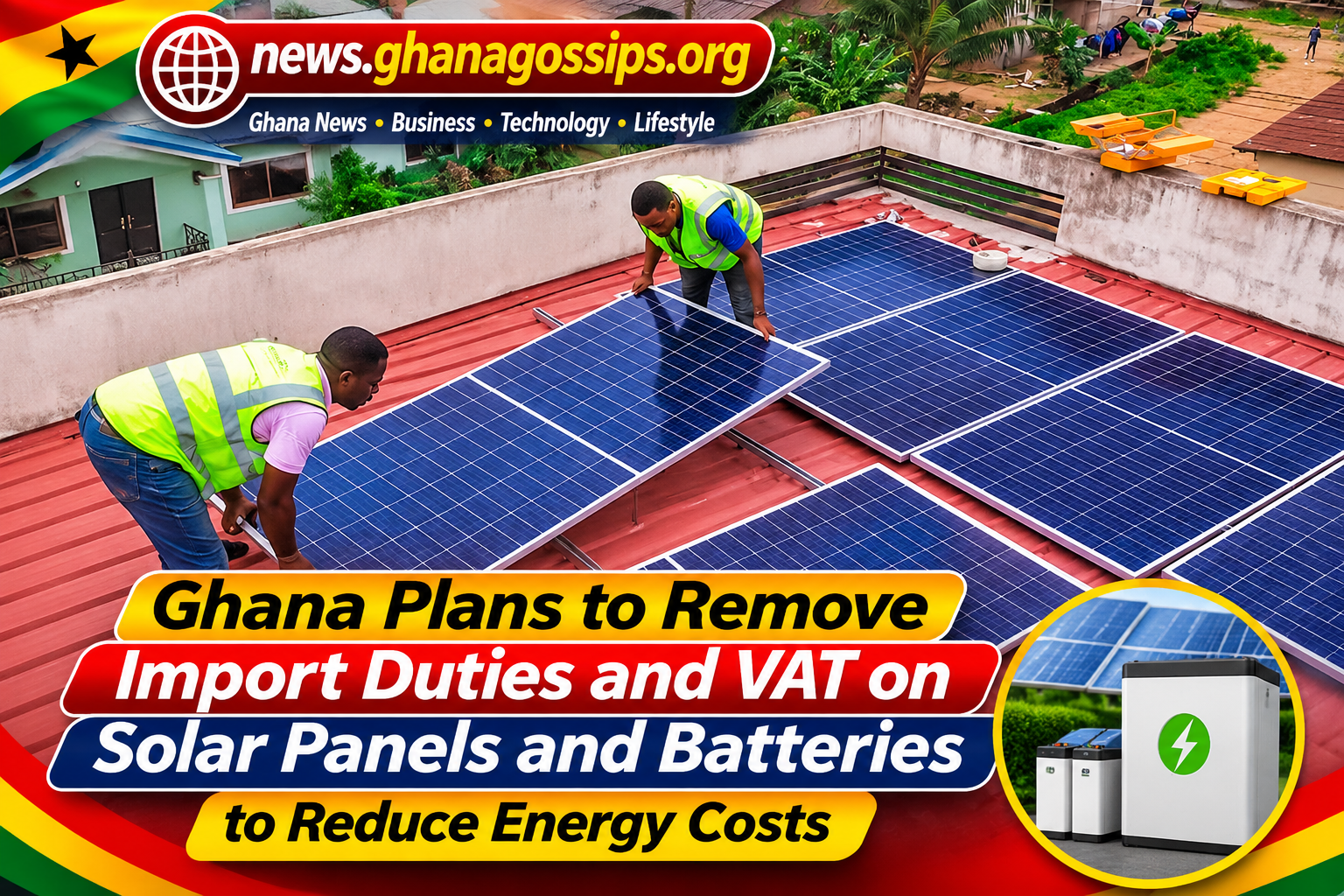
Ghana plans to reduce the import tax burden on solar panels and batteries to encourage renewable energy adoption.
Households could also benefit if the proposed tax relief reduces the retail prices of solar equipment.
A properly designed solar installation may help households reduce their electricity consumption from the grid.
Solar panels generate electricity during daylight hours, while batteries can store energy for later use.
Businesses could benefit from Ghana solar tax relief by reducing installation expenses.
The amount a household saves will depend on several factors, including the size of the installation, electricity consumption, equipment quality, battery capacity, installation costs and the household’s existing electricity tariff.
Not every household will immediately benefit from installing solar.
Customers should compare the total cost of the system against expected electricity savings and consider how long it may take for the investment to recover its cost.
A cheaper system is not necessarily the best system if its components are unreliable or unsuitable for the household’s energy needs.
Opportunities for Farmers and Agro-Processing Businesses
The proposed policy could also create opportunities for farmers and agricultural businesses.
Solar-powered irrigation systems can help farmers operate pumps where water and suitable infrastructure are available.
Solar energy may also support refrigeration, food storage, processing equipment, lighting and other agricultural activities.
Businesses involved in processing crops could benefit from lower operating costs if solar energy is suitable for their power requirements.
However, agricultural solar installations need careful planning.
Farmers should consider equipment capacity, water availability, seasonal production requirements, battery needs, maintenance and the availability of technical support.
The policy could encourage investment in solar-powered agricultural systems, but practical implementation and access to affordable financing will remain important.
Ghana plans to reduce the import tax burden on solar panels and batteries to encourage renewable energy adoption.
Solar Installers and Renewable Energy Businesses Could See Increased Demand
If solar equipment becomes more affordable, renewable energy companies could experience increased customer interest.
Businesses involved in importing solar panels, batteries, inverters, installation, maintenance and energy consultancy may have opportunities to expand.
The policy could also encourage entrepreneurs to develop financing models that allow customers to spread the cost of installations over time.
Solar companies will need to compete on equipment quality, installation standards, customer service, warranties and long-term support.
Customers should avoid purchasing equipment based only on advertised prices.
- If implemented, Ghana solar tax relief could support the country’s renewable energy transition.
They should verify product specifications, warranties, installer experience, battery performance and whether the system is appropriately designed for their needs.
What Could Determine the Success of the Tax Relief?
Removing import duties and VAT could reduce some costs associated with importing solar equipment.
However, the final retail price will also depend on exchange rates, shipping, distribution, installation expenses, financing costs and competition among suppliers.
The impact of the policy will therefore depend on how effectively the tax relief reaches consumers.
If importers pass on the savings, households and businesses may benefit from lower prices.
If other costs increase, the reduction may not be fully reflected in the price paid by customers.
The government will also need to ensure that the exemption is implemented transparently and that eligible products can be identified clearly.
Ghana’s Renewable Energy Opportunity
Ghana has significant solar potential because of its climate and geographical conditions.
Renewable energy could support household electricity needs, agricultural production, commercial activities and industrial operations.
The proposed tax relief represents an opportunity to encourage greater use of solar power.
However, renewable energy development also requires financing, technical expertise, reliable equipment, installation standards, consumer education and maintenance services.
The long-term impact of Ghana solar tax relief will depend on the final policy details.
The success of the policy should ultimately be measured by whether it improves access to affordable energy and encourages practical investment.
For households, the priority is lower energy costs.
For businesses, it is dependable power and improved productivity.
For farmers, it is affordable energy that supports production.
For Ghana, it is an opportunity to strengthen energy security and diversify the country’s power sources.
Ghana Gossips will continue monitoring Ghana’s energy policy, renewable energy investment, business developments and economic opportunities.
Ghana Gossips – Latest Ghana News
Ghana’s proposed solar tax relief could make solar panels and batteries more affordable and encourage renewable energy adoption.
External links
-
FAQ – Ghana Solar Panels and Battery Tax Relief
1. What is Ghana planning regarding solar panels and batteries?
Ghana is planning to remove import duties and VAT on solar panels and batteries to help reduce the cost of renewable energy equipment.2. Why is Ghana considering removing taxes on solar equipment?
The proposed tax relief aims to make solar energy more affordable for households, businesses and institutions while encouraging renewable energy adoption.3. Will solar panels become cheaper in Ghana?
If the tax exemptions are implemented and passed on to consumers, imported solar panels and batteries could become more affordable.4. Will the proposed tax exemption cover solar batteries?
The proposal reportedly includes solar batteries as well as solar panels, although the final implementation details will determine which products qualify.5. How can the tax relief benefit Ghanaian households?
Lower equipment costs could make solar electricity systems more accessible, helping households reduce dependence on the national electricity grid and manage electricity expenses.6. Will businesses also benefit from the proposed tax relief?
Yes. Businesses that invest in solar energy systems could potentially benefit from lower installation and equipment costs, depending on the final policy.7. Has the tax exemption officially taken effect?
The proposal should not be treated as implemented until the government officially announces the effective date and applicable regulations.8. Where can readers get more Ghana news updates?
Readers can visit news.ghanagossips.org for the latest Ghana news, business, technology and current affairs updates.













Leave a Reply