

Ghana’s reparations agenda is moving into a new planning phase after the country developed a five-year action plan intended to advance diplomatic engagement and build support for reparatory justice. The development was reported by the Ghana News Agency on October 20, 2026, from Bangkok.
The plan puts a longer-term framework around Ghana’s advocacy on the historical consequences of the transatlantic slave trade and colonialism. It is not an announcement that a compensation payment has been agreed, nor does it mean a settlement with any government is already in place. The distinction matters: diplomacy, negotiations, legal arguments and implementation can take years, and each step requires separate decisions.
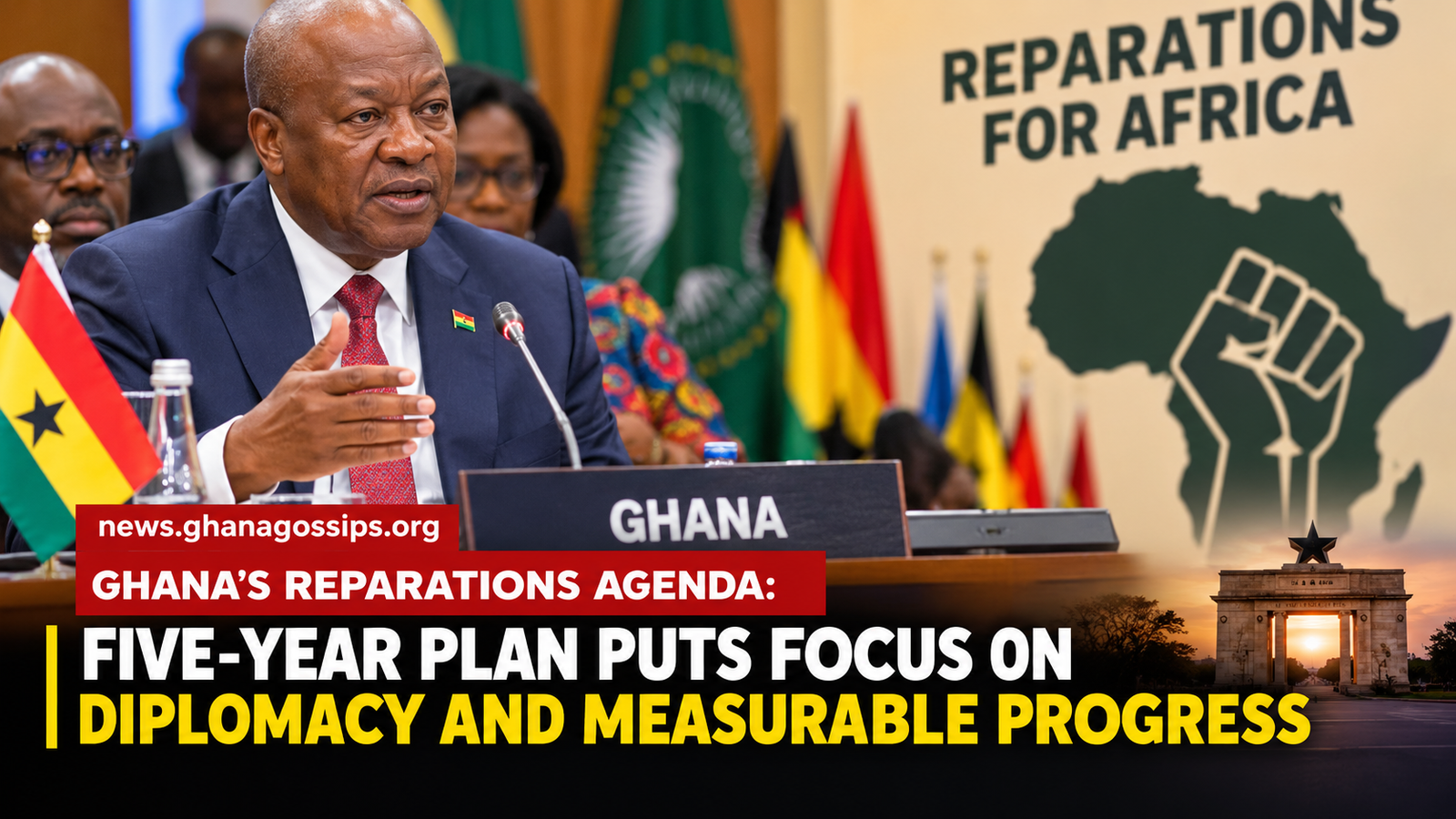
What the five-year plan signals
A multi-year plan can help Ghana organise its work across government institutions, diplomatic missions, regional partners and civil society. Instead of relying only on occasional public statements, a structured programme can identify priorities, set milestones and maintain continuity when officials change. It can also help supporters understand what progress should look like beyond a headline or summit declaration.
Ghana has played a visible role in international discussions about reparations. The country’s position has connected reparatory justice with recognition of historical harm, the return of cultural artefacts, and broader measures that could address lasting inequalities. The discussion is wider than a single cash payment. Different proposals may involve formal acknowledgement, educational initiatives, cultural restitution, development cooperation, debt-related measures or financial compensation.
Why the debate is wider than money
For many advocates, reparations begin with recognition: public acknowledgement of the scale and lasting consequences of the slave trade and related systems of exploitation. They argue that historical injustice shaped economies, institutions and opportunities across generations. Other participants focus on material outcomes, including the return of objects taken from African communities, support for heritage institutions, or investment that strengthens economic opportunity.
These approaches are not interchangeable. A government may support acknowledgement while disagreeing about financial liability. A museum may return an artefact under a separate agreement. A development programme may support communities without being formally described as reparations. Clear language is therefore important when reporting progress so that readers can distinguish advocacy, political commitments, negotiated agreements and completed actions.
What Ghana’s diplomacy may need to do next
The five-year framework will be meaningful if it translates broad goals into transparent work. Possible indicators include published priorities, diplomatic consultations, documented partnerships, timelines for cultural restitution discussions, and regular public updates. Where negotiations are confidential, the government can still explain the process and the issues being pursued without disclosing sensitive details.
Regional coordination is another central issue. The effects of the transatlantic slave trade crossed borders, and Ghana’s advocacy has involved African and Caribbean partners. A common approach can strengthen the political case, but countries may have different histories, legal positions and priorities. Consultation is needed to ensure that the agenda represents a range of communities rather than being reduced to a single national narrative.
Questions the public should ask
- Which institutions are responsible for delivering the five-year plan?
- What milestones will be published, and how often will progress be reviewed?
- How will Ghana consult traditional authorities, historians, affected communities and young people?
- How will any proposed financial or development-related outcomes be negotiated and accounted for?
- What role will cultural artefact restitution and heritage preservation play?
These questions are not a rejection of the agenda. They are a way to ensure that an important historical and diplomatic effort remains accountable and understandable. Public interest will naturally rise when a government announces a plan, but the long-term value depends on sustained work, evidence and credible reporting.
How to read future announcements
Readers should look carefully at the wording of official statements. “Developed a plan” means a framework exists. “Opened talks” means discussions have begun. “Reached an agreement” suggests parties have accepted terms, while “implemented” indicates that an agreed measure has been carried out. These are different stages and should not be presented as equivalent.
Ghana’s reparations agenda will continue to attract attention because it combines history, diplomacy, culture and questions about global fairness. The five-year plan offers a way to organise that work, but the public should expect concrete milestones and careful distinctions between proposals and results.
Source reporting: Ghana News Agency, “Ghana develops five-year plan to advance reparations agenda,” October 20, 2026. This article is an independently written explainer and does not claim that compensation has been agreed.










Leave a Reply